
What the gutter replacement process looks like
The gutter replacement process starts long before the old gutters come down. It begins with a visit to measure your home and ends with a water-flow check once the new system is up.
Knowing the steps helps you plan your day, ask good questions and spot a careful job. As a result, you can compare estimates on more than price.
Here is each step of a typical gutter replacement process, from the first visit to the final check.
Key takeaways
- A replacement starts with an on-site estimate and a measurement of every run.
- We take down the old gutters and downspouts and haul them away.
- We check the fascia boards behind the old gutters before new gutters go up.
- We form new seamless gutters to length on site and space the hangers for your roof.
- Each run slopes toward a downspout, and we place downspouts to drain away from the house.
- The job ends with cleanup and a final water-flow check.
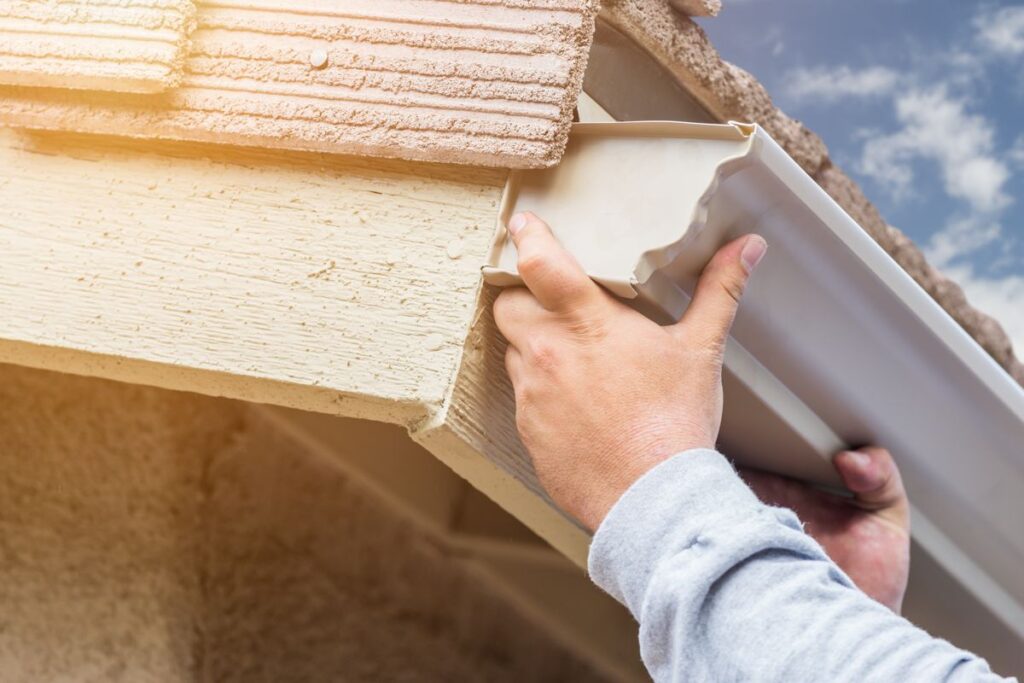
Is the gutter replacement process right for your home?
Not every gutter problem needs the full gutter replacement process. However, we can usually fix a leaking seam, a loose hanger or one damaged downspout.
Replacement makes more sense when gutters are rusted through, split along several seams or sagging in more than one place. If you are still deciding, our post on whether to repair or replace your gutters walks through the choice.
We’ll give you honest recommendations tailored to your home, no pressure, no sales pitch.
Step one, the estimate and measuring visit
The gutter replacement process starts with an on-site estimate. First, we walk the house, look at the roofline and measure every run.
We also note where water goes now. Stains on the fascia, worn spots in the soil and overflow marks all show where the old system struggles.
Our post on what to expect during a professional gutter estimate covers this visit in more detail. You get a free, written estimate before any work starts.
What to ask during the estimate
- How many downspouts will the new system have, and where will they drain?
- What size and color of gutter do you suggest, and why?
- Does the price include removal, haul-away and cleanup?
- What happens if the fascia needs repair once the old gutters are off?
Step two, choosing the material, size and profile
Most homes get seamless aluminum gutters in a size and color chosen to match the roof and trim. Aluminum forms easily into long runs and does not rust.
Size depends on how much water each part of the roof sends down. Our guide to 5 inch vs 6 inch gutters explains how roof area, pitch and valleys shape that choice.
The profile is the shape of the gutter seen from the end. Matching it to the house keeps the roofline looking clean.
Step three, removing the old gutters
On work day, the gutter replacement process begins with taking down the old gutters and downspouts. Next, we take them off in sections and haul them away.
In fact, this is often when hidden problems show up. Old screws, rusted hangers and soft wood can all be hiding behind a gutter that looked fine from the ground.
We keep the work area tidy as we go. We also collect old metal and fasteners so they don’t end up in your yard.
Step four, checking the fascia and roof edge
The fascia is the board along the roof edge that the gutter attaches to. Years of small leaks can soften it from behind.
With the old gutters off, we check the fascia boards behind them. Soft or rotted spots need attention before new gutters go up, because a weak board can’t hold hangers well.
If we find a problem here, we explain what it is and what fixing it involves. Then you decide how to proceed before we add that work.
Step five, forming seamless runs on site
Next, we form new seamless gutters to length on site. A forming machine shapes a coil of aluminum into a gutter and cuts it to fit each run.
As a result, each run comes out as one continuous piece from corner to corner. That leaves joints only at the corners, end caps and downspout outlets.
Fewer joints means fewer places for sealant to fail. Our comparison of seamless vs sectional gutters explains why that matters over time.
Step six, hanging the gutters with the right slope
Hangers are the brackets that hold the gutter to the fascia. We space them for your roof so the gutter stays straight and doesn’t sag under water or debris.
Each run gets a slight slope toward its downspout. That slope, also called pitch, keeps water moving instead of sitting in the trough.
As each run goes up, we seal the corners, end caps and outlets. A miter, the angled corner piece where two runs meet, gets careful fitting and sealing.
Step seven, placing the downspouts
We place downspouts so water drains away from the foundation, walkways and landscaping. Where they go matters as much as how many there are.
For this reason, we look at how the yard slopes and where water can flow safely. Downspouts placed where the yard slopes away carry rainwater past your walkways and planters instead of onto them.
An extension or splash block at the bottom can carry water a little farther from the house when needed.
Cleanup and the final check in the gutter replacement process
Once the gutters are up, we clean the work area. We also pick up old gutter pieces, screws and scraps and haul them away.
The last step in the gutter replacement process is a water-flow check. First, we run water through the gutters to confirm it flows to each downspout and drains away from the house.
This is a good time to walk the house with us and ask questions. You should see each run, each downspout and where the water goes.
What separates a careful gutter replacement process from a rushed one?
Two jobs can look alike from the street, yet a rushed gutter replacement process can drain very differently. The difference is usually in the details you can’t see at first.
- Hanger spacing: hangers set too far apart let a run sag once it fills with water or leaves.
- Slope: a run with too little slope holds water, and one with too much can look crooked.
- Sealed joints: corners, end caps and outlets need clean, complete sealing.
- Fascia check: new gutters on soft wood can pull loose within a few seasons.
- Downspout placement: a downspout that drains toward the foundation moves the problem instead of solving it.
Ask about each of these during the estimate. A good installer will explain how they handle every one.
What happens after the gutter replacement process ends?
After that, the first big rain is a good test. Walk around the house and watch where the water goes.
Above all, look for drips at the corners, water spilling over the front and puddles near the foundation. If anything looks off, call us so we can take a look.
Over time, keep the gutters clear of leaves and check the downspouts after storms. A quick look each fall and spring goes a long way.
How long does the gutter replacement process take?
It depends on the size of the house, the number of stories and corners and whether any fascia needs repair. A simple single-story home goes faster than a large two-story home with many corners.
We’ll give you a realistic idea of how long your gutter replacement process will take during the estimate. Weather can also shift the schedule, especially in the rainy season.
How should you prepare your home for the gutter replacement process?
In addition, a little prep makes work day go smoothly.
- Move cars out of the driveway if the crew will need the space.
- Clear patio furniture, planters and grills away from the walls.
- Keep pets inside while ladders and equipment are out.
- Let us know about sprinkler heads, lights or anything fragile near the house.
What affects the cost of a gutter replacement?
We don’t list prices in a blog post, because every home is different. The cost depends on a few clear factors.
- Length of the runs: more feet of gutter means more material and labor.
- Number of stories: taller homes take more time and ladder work.
- Corners: each corner needs a miter and careful sealing.
- Downspouts: the number and placement of downspouts changes the job.
- Fascia repair: soft or rotted boards need fixing before new gutters go up.
You get a free, written estimate before any work starts, so there are no surprises in the scope.
Why does timing matter in Sacramento?
Sacramento gets most of its rain in winter. The National Weather Service office in Sacramento tracks those storms each season.
Replacing failing gutters before the rainy season lets the new system handle the first big storm. It also gives you a dry day to fix any fascia problems found under the old gutters.
That said, there is no need to rush a decision. For example, a small repair can often get you through the season.
How can you check a contractor’s license?
In California, gutter work over a set dollar amount needs a licensed contractor. You can look up any license number on the Contractors State License Board website.
Vik’s Gutter Company is a licensed contractor, CSLB #806888. It’s a quick check worth doing before you sign with anyone.
What should you check before the gutter replacement process starts?
- Does the estimate list every step, from removal to the final check?
- Will someone check the fascia, and how will they handle repairs?
- How many downspouts are planned, and where will each drain?
- What size, profile and color did they choose, and why?
- Is cleanup included?
Common questions
Do I need to be home during the replacement?
It helps to be home at the start and at the end. That way you can confirm the plan and walk the finished job with us.
Can you replace only part of my gutters?
Yes. If only some runs have failed, replacing those runs can make sense. Matching the size and profile keeps the joints tight and the roofline even.
What happens to my old gutters?
We take down the old gutters and downspouts and haul them away. You don’t need to arrange disposal.
Will you check my fascia?
Yes. With the old gutters off, we check the fascia boards behind them. If any spots need repair, we explain the problem before doing the work.
Can you add gutter guards during a replacement?
They can, and it’s often a convenient time. Gutter guards do not make your gutters completely maintenance-free, but they can make cleaning easier and less frequent.
Planning your gutter replacement
In short, a good gutter replacement process is more than new metal on the house. It is about getting the right system installed cleanly, correctly, and with attention to the details that matter.
Learn more about our gutter replacement work and what it includes. Call (916) 659-7385 or request a free estimate.